Guido Jacofsky · Buenos Aires I build software that touches the physical world.
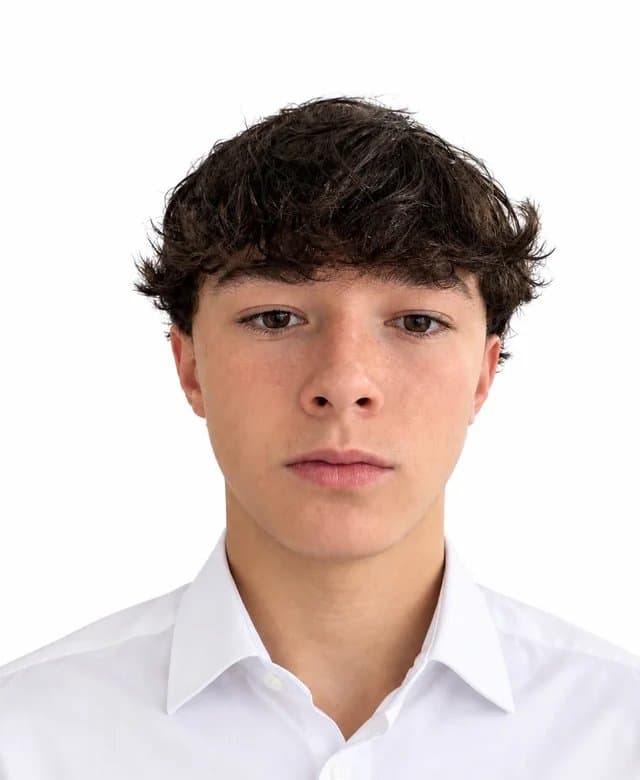
I'm Guido Jacofsky, I'm 17 and I'm finishing high school in the ICT track at ORT in Buenos Aires. At Gemm I build the virtual reality teleoperation and the web panel for the Unitree G1 humanoid. I'm also building Platto, a menu where every dish shows up in 3D on your table.
Software that lets commercial robots work in industrial plants.
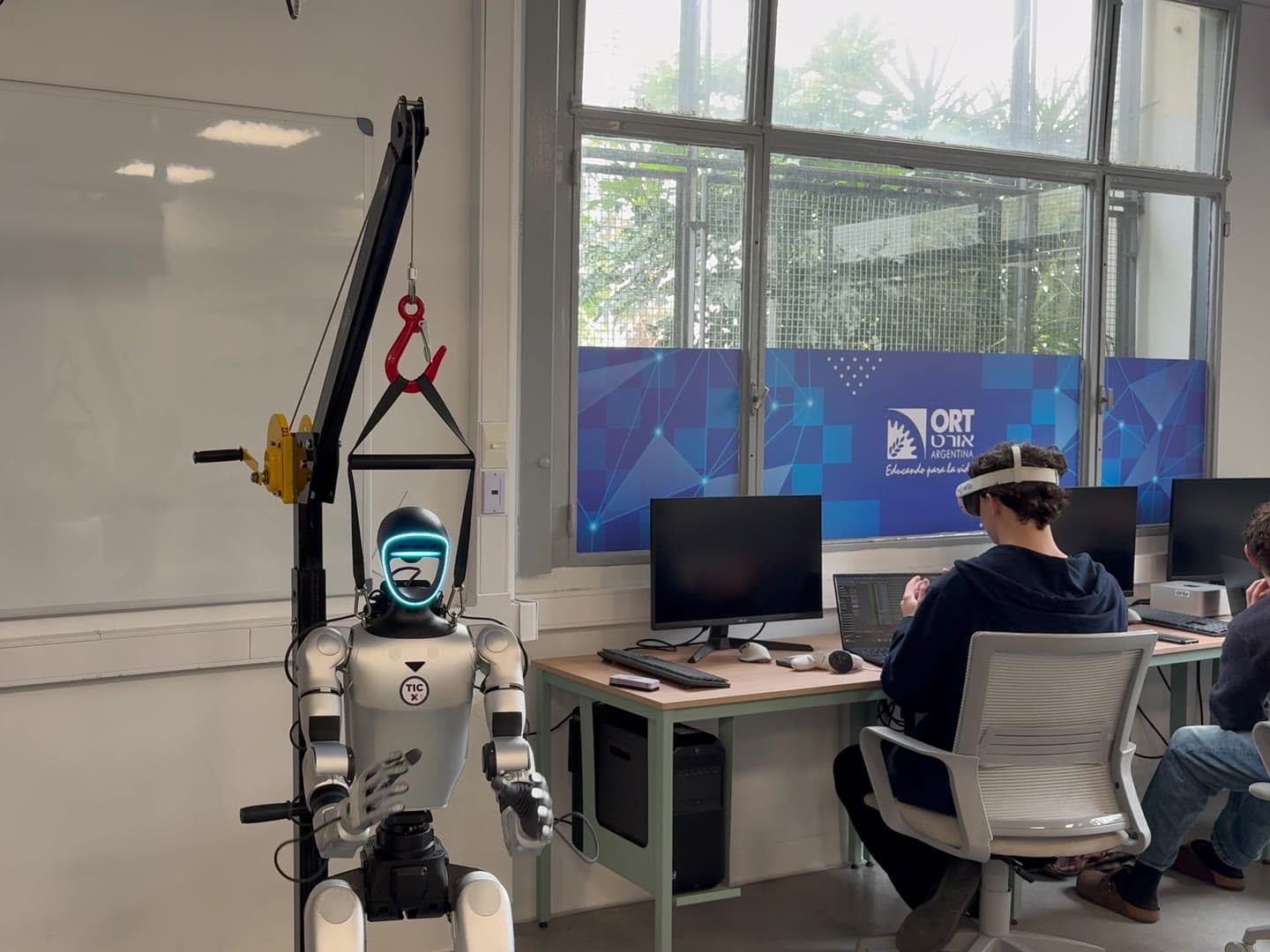
Gemm turns commercial robots —a Unitree Go2 and a G1 EDU humanoid— into plant operators: robots that perceive, map and work where a person shouldn't have to be. I build the virtual reality teleoperation, the robot's web panel and the manipulation module for the Dex5-1 hands.
Role: VR teleoperation, robot panel and Dex5-1 manipulation
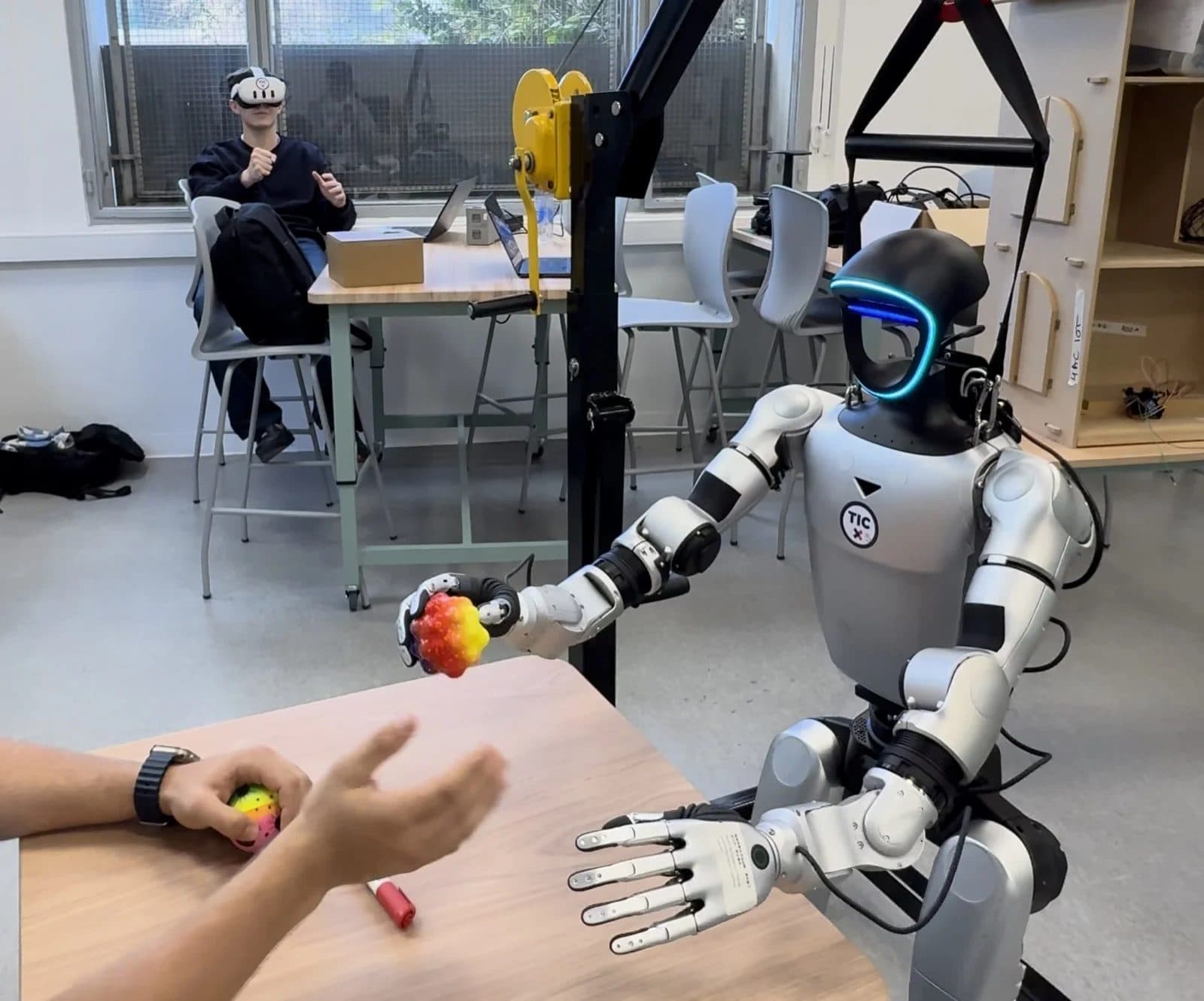
ORT, September 29: me in the Quest 3, teleoperating the G1.
The G1 grabbing a ball through teleoperation, in the ORT lab.
motors the panel shows live
29
motors the panel shows live
live video to the headset, smooth and light on the robot
HD
live video to the headset, smooth and light on the robot
to start teleoperation from the panel
1 button
to start teleoperation from the panel
tests in the manipulation module
137
tests in the manipulation module
02 · Platto · Jul 2026 — now · In development
A menu where every dish shows up in 3D and augmented reality, with nothing to install.
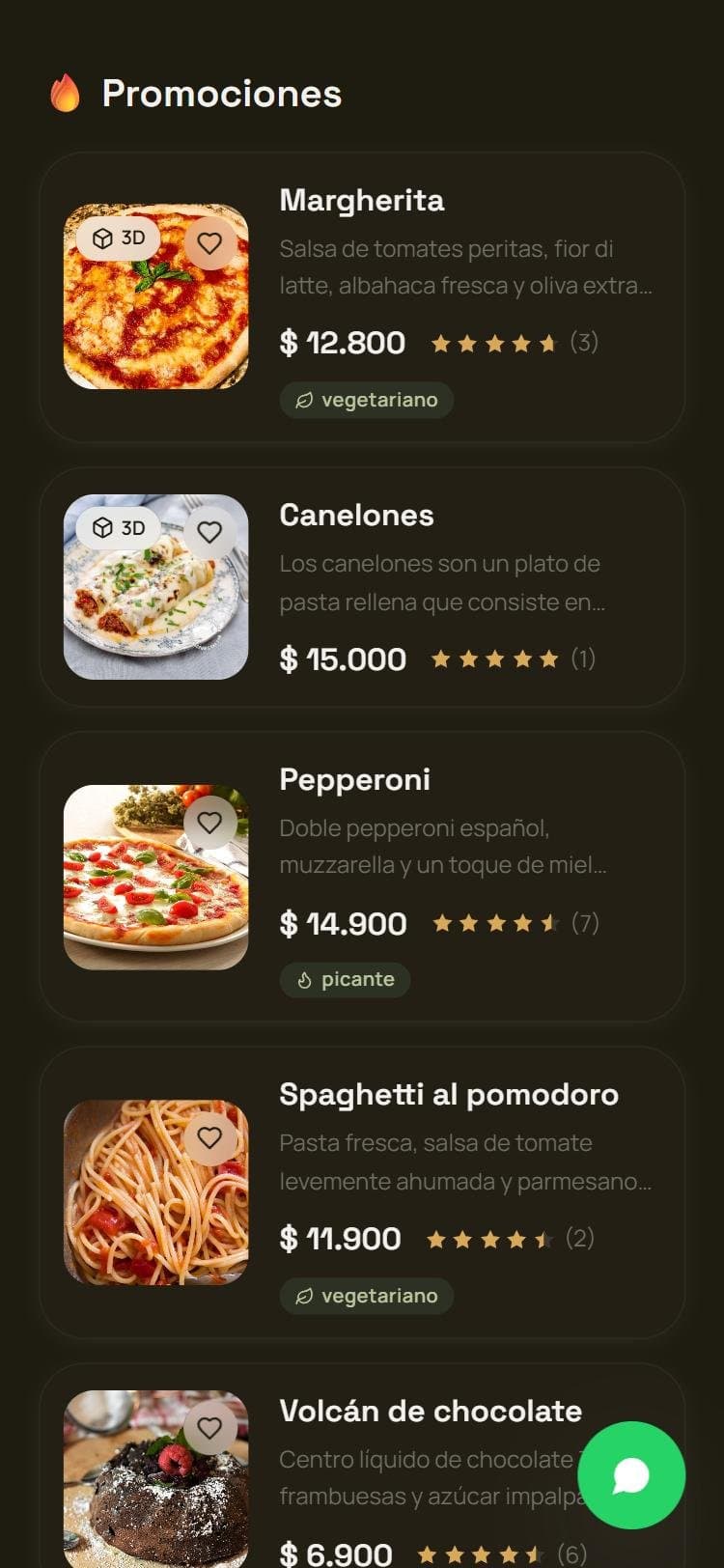
The customer scans the table's QR code, opens the menu in the browser and can spin each dish in 3D or see it served on their table through the camera. The hard part wasn't the menu: it was getting 3D that actually looks like the real dish.
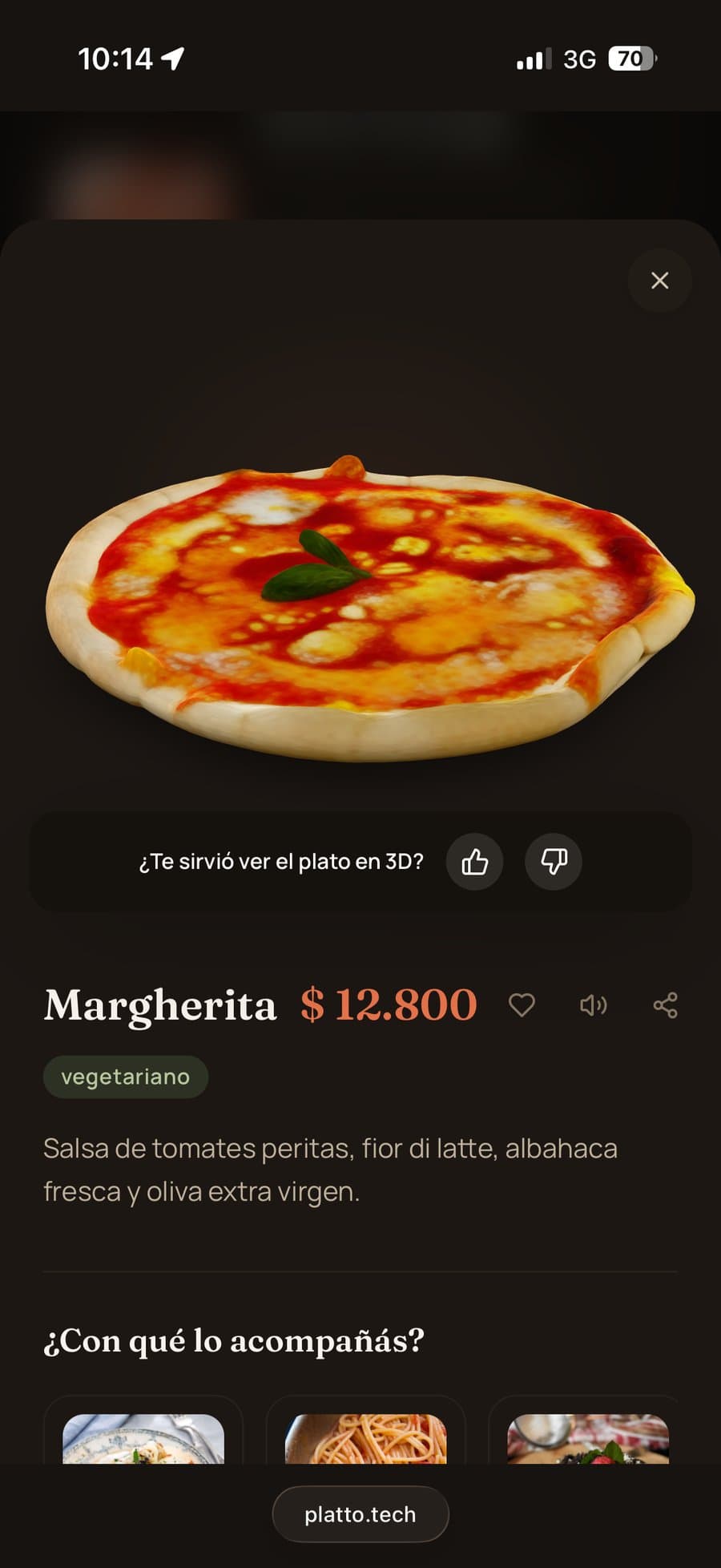
The demo's margherita, exactly as a customer sees it. Spin it with your finger or mouse.
turned into 3D: the pizza looked like a cake
1 photo
turned into 3D: the pizza looked like a cake
per dish with my own reconstruction system
15–20 min
per dish with my own reconstruction system
different paths I tried to get the 3D
6
different paths I tried to get the 3D
apps to install
0
apps to install
03 · Quicky · Apr — Jun 2026 · Shut down
Temporary rooms to move text, code and files between devices, no account needed.
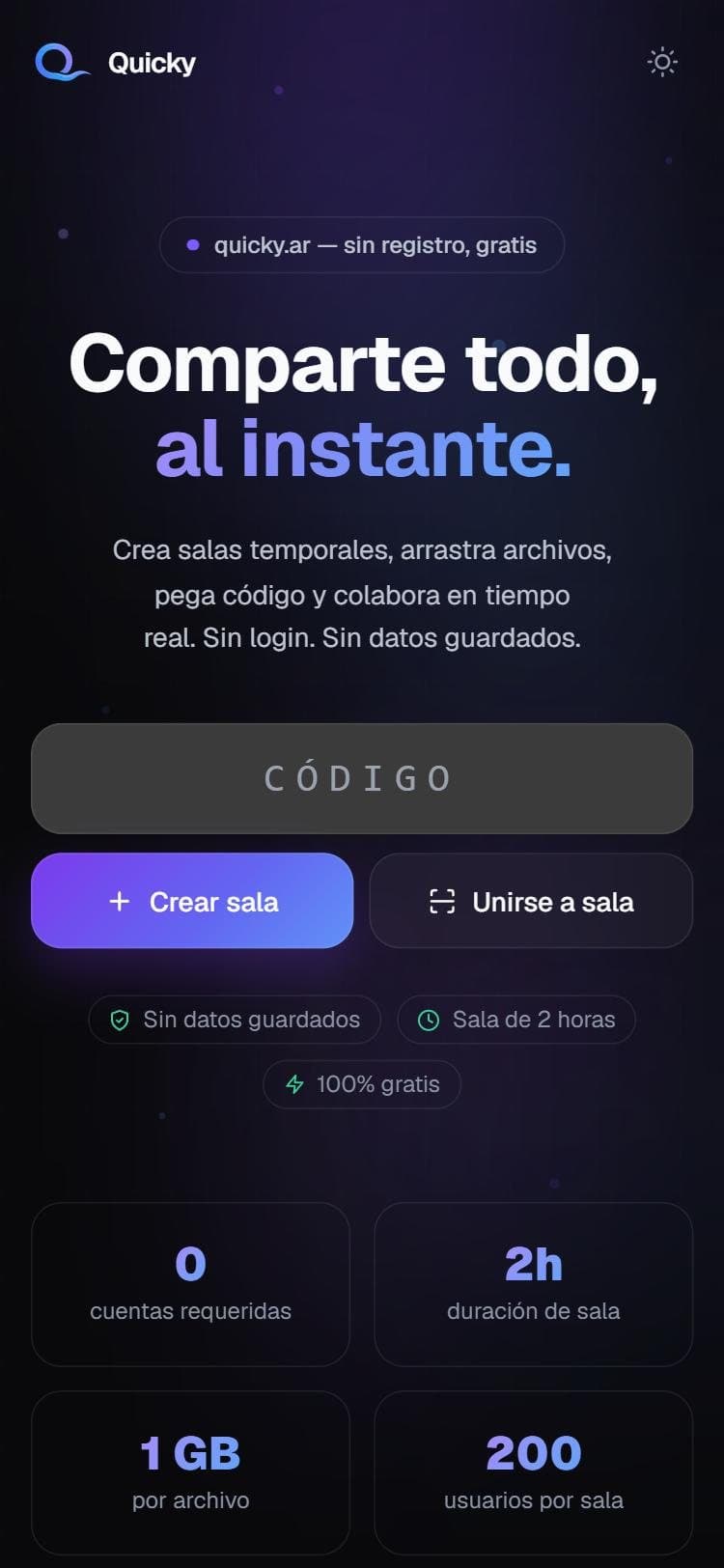
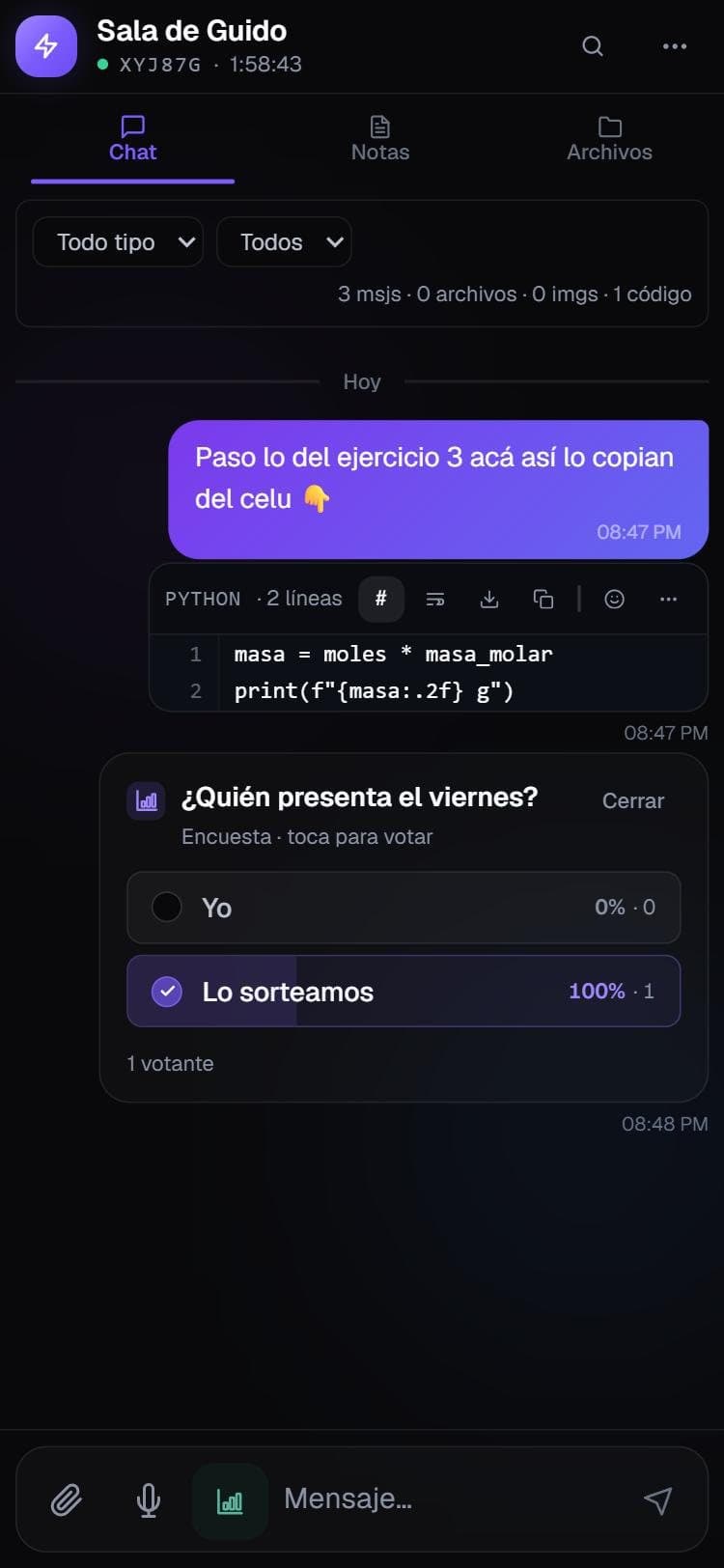
At school, getting something from the computer to your phone was a chore. Quicky solved it with a room and a 6-character code: you joined, shared messages, code, files and notes in real time, and after 2 hours everything was deleted. It was my first serious project: it was online for anyone, with its own server and built to grow. It's shut down now.
Role: Everything: product, design, frontend, server and deploy
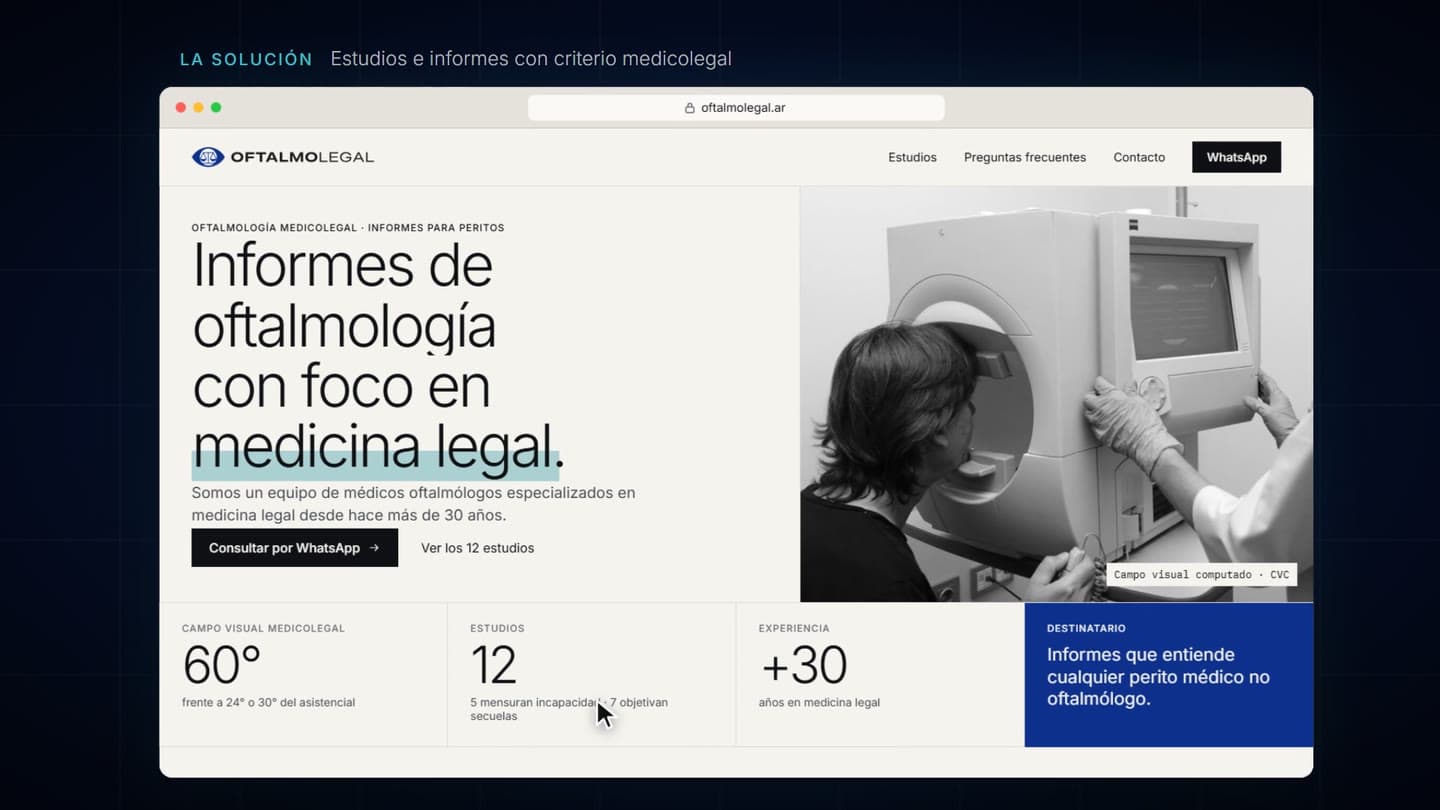
My dad's website: a WordPress landing page that cost ARS 400,000 a year and didn't show up on Google. I rebuilt it as a static site, with an interactive perimeter and full SEO and GEO. Now only the domain costs money: 94% less.
Understand any repository in 20 minutes. It analyzes a GitHub repo and tells you what to read, what to skip and in what order for the task at hand, and it remembers what you already understood.
My grandfather's plumbing supply shop is 50 years old and never had a system. I built the online catalog with in-store pickup and a counter that looks items up by code, records the sale and updates stock, so he can check how the day is going without being there.
Compares the price of USDC in pesos between p2p.me and Binance P2P and pings Telegram when the gap goes over 1%. It reads prices straight from the smart contract on the Base network, with no browser or login.
A smart pet feeder with an ESP32-CAM: schedules, portions, treats and a camera from an app. I built the backend (Node, Express and PostgreSQL) and the portion recommendation by breed and weight.
Sana, at Di Tella: AI triage for places with no doctor nearby, designed and pitched in two hours. TICApp, an AI platform for teachers: we didn't win. And one Google ran at ORT, where we showed Gemm Blocks; that led to a class at ITBA.
My first trade was at 11. Then came stocks, futures and different ways of reading a market, and over the years one question stuck: why does the same thing cost different amounts in different places? Today I do arbitrage between pesos, dollars, euros and crypto, and I run the numbers in Excel.
Age 11
A Binance account
A family member helped me get started by opening a Binance account for me to use. Even at that age I was curious about crypto, and especially about one idea: buying something at one price and selling it later for more.
Trying out strategies I found on YouTube and combining indicators, I bought Solana at 22 USDT. Two years later I sold it at 200 USDT. The figure isn't the point. It was the first time I bought and sold something and it worked, and it left me wanting to understand more.
After that
Learning on my own
I kept going on my own, with YouTube channels and whatever material I could find. I went through crypto, stocks and futures, and picked up different ways of trading and of analyzing a market.
There was no plan. I moved from one market to the next, trying to understand how prices move, what pushes them and how each instrument works.
Over the years
The gap, not the direction
At some point I stopped asking only whether something would go up or down. I got interested in how markets work underneath, and especially in something that keeps happening: the same thing isn't worth the same everywhere. The price of an asset or a currency changes between exchanges, between currencies and between P2P platforms, where people buy and sell directly with each other.
That's what arbitrage is: finding those gaps and working out whether they're worth taking. It doesn't depend on guessing where the price is headed. It depends on getting the math right.
Now · age 17
Multicurrency arbitrage
Today it's something I actively do. I work with Argentine pesos, US dollars, euros, crypto and stablecoins, on exchanges and in P2P markets. I compare prices and exchange rates, think through the possible conversion routes and work out what each step costs.
A gap on a screen isn't a profit. Between what you see and what you keep there are fees, the cost of each conversion and whatever it takes for the trade to actually go through. A gap that looks good can leave nothing, or a lot less than it seemed.
Currencies
Argentine pesos (ARS) · US dollars (USD) · Euros (EUR)
Crypto
Cryptocurrencies and stablecoins
Where
Exchanges and P2P markets
Math
Excel spreadsheets with formulas
How
The math, in Excel
Over time I built a way of working that I repeat on every operation. It runs on Excel spreadsheets with formulas: the prices, the cost of each step and what's left at the end. That way I decide with the math done, not by eye or in my head.
It's the same way I think when I code: understand how the system works, separate what something looks like from what's actually happening, and let the decision come out of a process I can repeat.
fx=C2-D2
A
B
C
D
E
1
buy at
sell at
gap
costs
left
2
price
price
=B2-A2
=SUM(steps)
=C2-D2
The math behind each operation, simplified. No numbers, on purpose.
It started with a kid's question: if I buy at this price, can I sell it for more? Six years later my questions aren't that different, but I answer them differently: with formulas, with costs, and looking at several markets at once.
04 — Skills
What I can do
01
From idea to deploy, on my own
I design, build, ship and maintain complete products: Quicky, Platto, RepoGuide, my grandfather's shop system.
I started coding at school, in ORT's ICT track. In 2026 my projects left the screen.
01
Build before planning
A working MVP beats a perfect plan. Action produces information.
02
Problem first
Gemm taught me this: interesting technology doesn't mean anyone needs it. That's why we went to talk to YPF and PAE before building more.
03
Speed with understanding
I code with AI, but if I don't understand what it generated I can't fix it when it breaks. And it always breaks at the worst moment.
04
Only claim what's validated
If something works in simulation, I say simulation. If a provider isn't connected, the system says so instead of making up a result.
08 — FAQ
What people usually ask
Who is Guido Jacofsky?
+
Guido Jacofsky is a 17-year-old Argentine student from Buenos Aires who is finishing high school in the ICT track at ORT Argentina. He builds the virtual reality teleoperation and the web panel for the Unitree G1 humanoid robot at Gemm, and is building Platto, a restaurant menu with dishes in 3D and augmented reality.
What does Guido Jacofsky do at Gemm?
+
Gemm builds software that lets commercial robots work in industrial plants. Guido owns the virtual reality teleoperation of the Unitree G1, the robot's web panel and the manipulation module for the Dex5-1 hands.
What is Platto?
+
Platto is a restaurant menu where every dish can be seen in 3D and augmented reality from the phone's browser, with no app to install. Guido Jacofsky is its founder and builds it end to end.
What is Quicky?
+
Quicky is a web app to move text, code and files between devices using a room and a 6-character code, with no account. Rooms are deleted after 2 hours. It was Guido Jacofsky's first serious project: he built it end to end and it ran live on its own server. It's shut down now.
What other projects has he built?
+
He rebuilt the OftalmoLegal website, cutting its cost from ARS 400,000 to ARS 25,500 a year; built RepoGuide, a tool to understand repositories with AI; the stock and counter system for his grandfather's plumbing supply shop; a bot that compares digital dollar prices; and took part in hackathons such as the one at Universidad Di Tella.
What technologies does he use?
+
Mainly TypeScript, Next.js, React, Python and PostgreSQL. In robotics, ROS 2, the Unitree SDK and virtual reality with a Meta Quest 3.
How can I contact Guido Jacofsky?
+
By email at guidojacofskyy@gmail.com or on LinkedIn (linkedin.com/in/guidojacofsky). His CV can be downloaded from this page.
09 — Contact
Write to me
If you have an internship, a project, a plant with a round you'd rather a robot walked, or you just want to talk, write to me.